
Government Auctions: The Complete Guide (2026)
How federal, state and local governments sell what they are done with, where the sales are, how bidding and fees work, what things really sell for, and how to buy your first lot without a mistake. Written from the UX Search index: 80,187 government auctions live right now and 63,049 closed sales with real prices over the past year.
- Live right now
- 80,187
- States
- 50
- Platforms read
- 28
- Sold this year
- 63,049
What government auctions are
A government auction is a public sale of something a government no longer needs. The seller is the agency itself: a city public works department selling the pickup it replaced, a sheriff's office selling the property room's unclaimed bicycles, a state transportation department selling a grader, a federal agency selling a fleet sedan, a county selling a house for unpaid taxes. There is no dealer in the middle and no reserve in most cases; the item goes to the last bidder when the clock runs out, and the agency's own name is on the listing.
The volume is larger than most people expect. Every vehicle a government buys is eventually sold this way, and so is nearly everything else it owns, from office furniture to fire trucks. On the day this page was built the UX Search index held 80,187 live government auctions across 50 states, and the sold archive held 63,049 closed sales from the past year with the real winning bids. The biggest sellers right now are St. Louis Land Reutilization Authority, City of Pittsburgh, City of Chicago (Planning and Development) and Department of Medicine and Surgery.
Three things set government auctions apart from a dealer or a private sale. The seller does not care what the item is worth to you, only that it goes; the price is whatever the bidding reaches. The item is sold as is, where it is, with photos and a description and usually no warranty of any kind. And the buyer does nearly all the work after the sale: paying within days, picking the item up in person within a window, and in the case of a vehicle, getting the title transferred through the seller's paperwork. People who understand those three things buy well at government auction; people who treat it like a store get burned.
Where they happen
Government auctions run on a small number of online platforms, and the platform tells you who the seller is. GovDeals is where most cities, counties, school districts, utilities and transit agencies sell, and it is the largest single source of listings in our index. Public Surplus serves many of the same kinds of agencies, especially in the West. Municibid is strong in the Northeast. GSA Auctions is the federal government's own site, selling vehicles, equipment and everything from furniture to aircraft parts on behalf of federal agencies, and GSA Fleet sells the federal leased-vehicle fleet as it turns over, which is the best source of low-mileage, well-serviced sedans and pickups in the country. GovPlanet sells military surplus from the Defense Logistics Agency, the Humvees, trucks and trailers. The IRS, the Treasury and the U.S. Marshals sell seized property, from cars to jewelry to houses, and HUD HomeStore sells the homes the government took back on FHA loans.
Several states run their own surplus stores and sites rather than using a national platform: Wisconsin Surplus, North Carolina State Surplus, Illinois iBid, Michigan MiBid, Minnesota MNBid and Utah State Surplus among them. Police property rooms sell through PropertyRoom. Counties sell tax-foreclosed land and homes through their own sales and through sheriff's sale sites. UX Search reads 28 of these platforms into one index, so one search covers all of them; right now the most listings are on Proxibid, GovDeals, St. Louis LRA, Purple Wave, City of Pittsburgh and J.J. Kane.
Each platform has its own account, its own rules and its own fees, and a buyer who shops across all of them ends up with a half-dozen logins. That is the problem this site exists to solve: the search, the state pages, the category pages and the sold prices here cover every platform at once, and every listing links to the platform that runs the sale, which is where the bidding happens. UX Search never takes a bid.
How bidding works
Nearly every government auction today is an online timed auction. The listing opens with a starting bid, often a token amount, and closes at a set date and time. You bid by entering the most you are willing to pay, and the platform bids for you in increments against other bidders up to that limit, so the price only rises as far as the competition pushes it. If a bid comes in during the last minutes, most platforms extend the close by a few minutes, over and over, until the bidding stops; the sale ends when nobody has bid for the extension period, not at the posted time. That is why a lot that reads "closes at 2:00 PM" often ends at 2:20.
Registering is free on the government platforms, and it takes a name, an address, an email and a phone number. Some sellers require a card on file before you can bid, and some require a deposit for high-value lots, held against the purchase and forfeited if you win and do not pay. GSA Auctions and GovPlanet require a card or a deposit on everything; GovDeals and Public Surplus leave it to the selling agency. Read the terms on the listing, not just the platform's general rules, because the agency sets the premium, the payment deadline and the pickup window, and they differ from one agency to the next on the same platform.
Inspection is almost always allowed and almost never required. The listing gives the location and a contact; a phone call gets you a time to see the item before the sale closes. For a vehicle, that means starting it, looking underneath, reading the odometer and the VIN yourself, and pulling the codes if you can. For equipment, hours, fluids and a walk-around. The sellers do not hide problems; they list the ones they know and say nothing about the ones they don't, and the photos are often the only description. Buyers who inspect pay less for what they want and skip what they shouldn't have bought.
What it really costs
The hammer price is not the price. A buyer's premium is added on most platforms, set by the selling agency within the platform's options. On GovDeals the agency chooses, and the common choices are 10 percent and 12.5 percent, with a few agencies passing on less or nothing. On Public Surplus it is set per agency, commonly around 10 percent. On GSA Auctions there is no buyer's premium; the price you bid is the price you pay. GovPlanet charges a transaction fee that scales with the price and is shown on each listing before you bid. On top of the premium, sales tax applies at the seller's local rate unless you hold a resale certificate or another exemption, and some platforms charge a card-processing fee on larger payments or require a wire.
Then there is getting it home. Government sales are pickup only, from the agency's yard, a county garage, a school bus barn or a federal depot, and the window is short: typically five to ten business days after payment, sometimes less. A vehicle you can drive is an afternoon; a vehicle that does not run, or a backhoe, needs a trailer or a hauler, and the quote for that belongs in your bid math before the sale closes, not after. Our shipping and services directory lists haulers and inspectors by area. Miss the window and most agencies charge storage by the day; miss it by much and they keep the item and the money.
A worked example from the GovDeals terms we checked: a pickup that hammers at $2,000 with a 10 percent premium costs $2,200, plus sales tax at the seller's rate, plus whatever it takes to collect it. A buyer who planned on $2,000 and paid $2,500 all-in did not get a bad deal; they got the normal deal and did not do the math.
What sells, and what it sells for
Vehicles are the largest category by far: retired police vehicles, fleet sedans and SUVs, pickups and work trucks, vans and buses. Heavy equipment is second: backhoes, loaders, excavators, mowers and tractors from public works and parks departments. Then everything else a government owns: trailers, boats from marine patrols and fish and wildlife agencies, generators, tools, computers and phones by the pallet, office furniture by the room, and seized property from the sheriff's room, which can be anything. Real estate is its own world: tax-foreclosed parcels, surplus lots and buildings, and the HUD and USDA homes.
What it sells for is the question the sold archive answers. Over the past year the middle hammer price across 63,049 closed government sales was $3,270, which tells you only that half of everything sold for less. By category the picture is sharper: police car & emergency vehicle ran a middle price of $1,925 over 2,052 sales, pickup truck & van ran a middle price of $12,025 over 8,246 sales, car & suv ran a middle price of $6,450 over 34,623 sales, heavy equipment ran a middle price of $9,600 over 2,092 sales, commercial truck, trailer & bus ran a middle price of $6,810 over 3,668 sales and boat & yacht ran a middle price of $900 over 677 sales. The table below is live, and each category links to its own page with the sales behind the number.
| Category | Live now | Sold this year | Middle price | Range |
|---|---|---|---|---|
| Police Car & Emergency Vehicle | 587 | 2,052 | $1,925 | $1 to $21,500 |
| Pickup Truck & Van | 5,157 | 8,246 | $12,025 | $1 to $75,500 |
| Car & SUV | 15,898 | 34,623 | $6,450 | $1 to $115,000 |
| Heavy Equipment | 8,547 | 2,092 | $9,600 | $8 to $338,000 |
| Commercial Truck, Trailer & Bus | 6,050 | 3,668 | $6,810 | $1 to $426,000 |
| Boat & Yacht | 400 | 677 | $900 | $1 to $800,000 |
| Electronics & Computer | 1,440 | 1,435 | $170 | $1 to $99,000 |
| Furniture & Household | 3,320 | 1,293 | $25 | $1 to $59,000 |
| Farm Equipment & Tractor | 3,363 | 1,036 | $4,850 | $3 to $98,500 |
| Motorcycle, ATV & Powersports | 935 | 1,910 | $1,100 | $1 to $69,000 |
Hammer prices before the buyer's premium and tax, from the UX sold archive over the past year. No-bid lots are not counted.
Where the auctions are right now
Right now the states with the most live government auctions are Missouri (9,856), Pennsylvania (5,236), Texas (3,685), California (3,447) and Florida (2,365). Every state has its own page with the live listings, the cities and counties with the most, the agencies selling, and what things sold for there, and every city with live listings has a page under its state. If you only read one page on this site, read your state's.
38 more
Oklahoma, Nevada, Kentucky, Iowa, Alabama, Washington, Maryland, Arkansas, Louisiana, Utah, Michigan, New York, Minnesota, Arizona, Indiana, South Carolina, New Jersey, Colorado, Alaska, Massachusetts, Oregon, Nebraska, Wisconsin, New Mexico, South Dakota, North Dakota, West Virginia, Connecticut, Mississippi, Idaho, Hawaii, Wyoming, New Hampshire, Montana, Maine, Rhode Island, Delaware, Vermont
A few of the 80,187 live right now
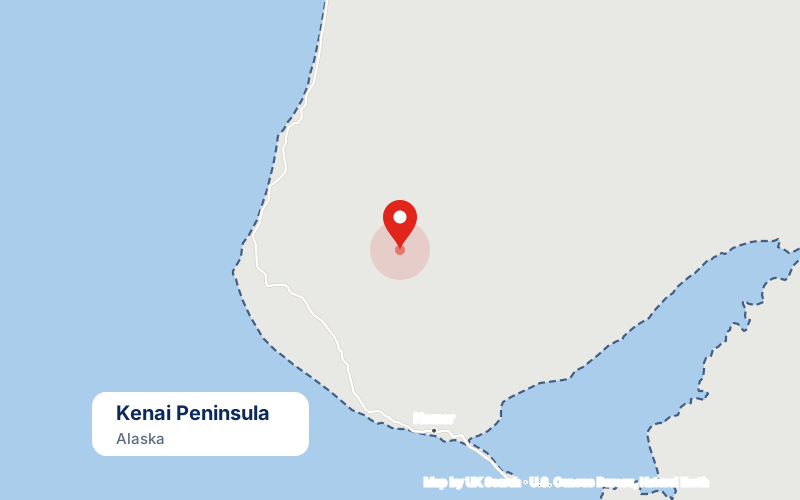 Alaska State Land Sales
Alaska state land (over the counter), North Fork Micro Ag (Agricultural Lots), lot 2, block 6 (Southcentral): 25.66 acres, appraised $46,700, veterans price $35,025, sales open Nov 18, 2026, pending, parcel 499-4
AK
$60,710
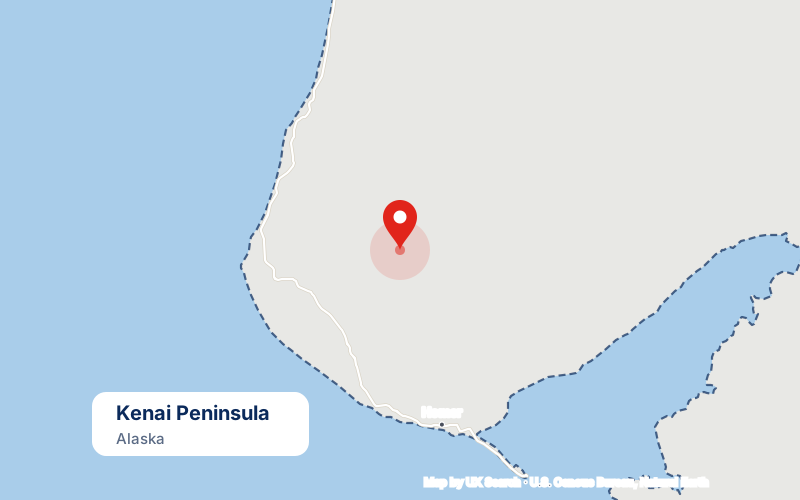 Alaska State Land Sales
Alaska state land (over the counter), North Fork Micro Ag (Agricultural Lots), lot 5, block 4 (Southcentral): 28.47 acres, appraised $71,200, veterans price $53,400, road access, sales open Nov 18, 2026, pending, parcel 499-7
AK
$92,560
 GSA Auctions
Blanket Warming Cabinets
SAINT PAUL, MN
See price
 GSA Auctions
Digital Cameras
SAINT PAUL, MN
See price
 GSA Auctions
Handheld Barcode Scanners
SAINT PAUL, MN
See price
 GSA Auctions
Wide Belt Sander
SAINT PAUL, MN
See price
 GSA Auctions
Motorized Platform Carts
SAINT PAUL, MN
See price
 GSA Auctions
Mesh Stacking Chairs
SAINT PAUL, MN
See price
Your first auction, step by step
Start with what you can pick up. Open government auctions near you or your state page and look at what is closing in the next week within a drive you would make. Pick one kind of thing, a pickup, a mower, a lot of office chairs, and read every listing for it, including the ones that already closed on the sold pages, until the prices stop surprising you. That takes an evening, and it is the whole secret.
Register on the platform the listing is on, which is free, and put a card on file if the seller requires it. Call the contact on the listing and go see the item if it is worth more than a few hundred dollars to you. Write down the most you will pay all-in, subtract the premium, the tax and the pickup, and that is your maximum bid. Enter it once and let the platform bid for you; do not sit at the close and chase. If you lose, you lost to someone who valued it more than you did, which is fine. If you win, pay the same day, arrange the pickup the same day, and bring the award notice, your ID and the receipt to the yard.
Your second auction is easier than your first and your tenth is routine. The buyers who do this for a living, the fleet dealers, the equipment resellers, the people who clear office furniture by the truckload, all started with one lot close to home.
The mistakes that cost money
Bidding on a photo. A listing with two photos of a truck and no description of whether it runs is telling you something. Call, visit, or assume the worst in your bid. Forgetting the premium and the tax, covered above. Winning something you cannot move: an item 600 miles away, a machine with no trailer to put it on, a lot of 40 desks with a pickup to collect them in. Missing the pickup window, which turns a bargain into a storage bill or a forfeit. Buying a vehicle with a title problem: federal vehicles come with a Standard Form 97 rather than a state title, which your DMV will convert, but a salvage or a junk title on a state listing is what it says. And the one that catches new buyers most often, bidding in the last two minutes against someone who set a maximum hours ago; you are not bidding against a person at the keyboard, you are bidding against their limit, and the extension clock keeps running until you quit.
After you win
The platform sends an award notice with the amount due and the deadline, usually two to five business days. Pay by card, wire or the method the terms allow; cash at the yard is rare now. The seller then releases the item, and for a vehicle, hands you the title or the SF-97 along with the keys; check that the VIN on the paper matches the VIN on the truck before you leave. Take the item within the window, bring help if it is heavy, and bring a battery, a tow strap and basic tools if it is a vehicle that has sat. A retired fleet vehicle has usually had its markings removed and its emergency equipment pulled; a police vehicle sold with the light bar on still needs the lights removed or disabled before it is legal on the road in most states.
Then do what the professionals do: write down what you paid all-in, what you spent to make it right, and what it was worth to you. That number, kept over a few purchases, is better than any price guide, and it is exactly what the Price Report on this site is built from, one closed sale at a time.
Questions people ask
Are government auctions open to the public?
Yes. Anyone can register and bid on the government auction platforms; a few sales, such as some seized-property and dealer-only vehicle sales, restrict bidders, and the listing says so.
Is there a site that searches every government auction at once?
UX Search does: it reads 28 government auction platforms into one index, 80,187 live listings right now, and links each one to the official sale. It is free and needs no account.
How much is the buyer's premium at government auctions?
It depends on the platform and the seller: commonly 10 to 12.5 percent on GovDeals, around 10 percent on Public Surplus, none on GSA Auctions, and a transaction fee shown per listing on GovPlanet. Sales tax is added unless you are exempt.
Can I inspect before I bid?
Almost always. The listing gives a location and a contact; call for a time. Inspection is the single best way to pay less and avoid a bad buy.
Do I have to pick the item up myself?
Usually yes, in person, within a window of about five to ten business days after payment. Many sellers allow a hauler or another person to collect with written authorization. Vehicles and equipment are never shipped by the seller.
How do I get a title for a government vehicle?
State and local vehicles come with a state title signed over to you. Federal vehicles come with a Standard Form 97, which your DMV converts to a title. Check that the VIN on the paperwork matches the vehicle before you leave the yard.
What do things sell for?
The UX sold archive has 63,049 closed government sales from the past year with the real hammer prices; the category and state pages on this site show the middle price and the sales behind it.
Why do auctions close later than the posted time?
Most platforms extend the close by a few minutes whenever a bid arrives near the end, until nobody bids for the extension period. Set your maximum early and let the platform bid for you.
Are government auctions cheaper than dealers?
Often, and not always. A well-kept fleet pickup can sell for a fraction of retail; a popular item with many bidders can reach retail. The sold prices show what each kind of thing has been bringing.
Does UX Search sell anything or take bids?
No. UX Search indexes the platforms and links to them. Bidding, payment and pickup happen on the platform that runs the sale, under its terms.
Written by the UX Auctions editorial staff from the UX Search index and the platform terms checked on each platform's page on this site. Live counts update every 15 minutes; the sold prices are real hammer prices over the past year. Updated October 27, 2026. UX Search is independent, is not affiliated with any government agency or auction platform, and never takes a bid.
What pickup truck really sold for
Price Report →Closed sales with the real hammer price, from the UX sold archive.
 Ford F-350 4X4 Crew Cab Dually Diesel Pickup TruckSold for $35,000
Oct 27 · FL
 BRAND NEW 1500 LB COMMERCIAL PICKUP TRUCK CRANE WITH REMOTE CONTROLLED ELECTRIC WINCH $ $225 RESERVE - SHIPPING ONLYSold for $245
Oct 26 · GA
 2009 Ford 4WD F-250 Pickup Truck - V-8 5.4 L EngineSold for $5,050
Oct 25
 2013 Ford F150 Pickup TruckSold for $1,895
Oct 24 · VA
Read the story
UX Auctions → Inside a Live GSA Fleet Auction: Homeland Security Ford Explorers, Police SUVs, Trucks and Federal Vehicles Cross the BlockInside the October 13, 2026, GSA Fleet auction, featuring Homeland Security Ford Explorers, police SUVs, federal trucks, commercial vehicles, and original auction footage.UX Auctions · Oct 13, 2026